Author Archives: Juliane Böhm

NOGGO S35 – Expression XXI – (21)

NOGGO S35 / Expression XXI – (21) / SARA Study

Survey study on the quality of life of patients with endometrial cancer

The SARA study is a Europe-wide survey study on the quality of life of patients with endometrial cancer. The aim is to record acute and long-term side effects of treatment, as well as their impact on the daily lives and well-being of patients.

What is being investigated in the survey?

Endometrial cancer is one of the most common cancers among women in industrialized countries – ranking fourth after breast, colorectal, and lung cancer. In most cases, the disease is detected early, which increases the chances of recovery. Despite good survival rates, treatment can cause side effects that can impair the quality of life in the long term. These can be physical (e.g., nerve damage such as polyneuropathy or hair loss), psychological, or social. The SARA study aims to better understand how these burdens are experienced and what long-term consequences they have for patients. The survey considers many aspects of life with endometrial cancer: comorbidities, general health status, polypharmacy (taking multiple medications), side effects, psychological well-being, daily life, relationships, employment, and level of information about treatment options.

What is the aim of the survey?

The main goal of the study is to record the frequency of certain side effects – particularly nerve damage (polyneuropathy) and hair loss – and to assess how strongly these affect the quality of life.
In addition, the following points will also be investigated:

  • treatment preferences and therapy adherence (whether and how well therapies are followed)
  • financial and time burdens due to the disease
  • how well patients feel informed about treatment options and medical guidelines

What is the survey process?

A total of approximately 500 patients are to be surveyed for the study, including 100 patients from Germany. Participation in the SARA study is via a questionnaire that affected women can complete – regardless of the stage of their disease or what treatment they are receiving (or have received). Three groups of patients are compared:

  • Group A: Women with a first-time diagnosis of endometrial cancer
  • Group B: Women with a recurrence of the disease
  • Group C: Women who are in the post-treatment phase

Are there any risks?

Expression 21 is a survey study and therefore has no participation risks.

Participation requirements:

The survey is voluntary and is aimed at all women affected by endometrial cancer, regardless of whether the disease has occurred for the first time or has recurred. The minimum age for participation is 18 years.

Where can I participate in the survey?

Currently, patients can participate in the study through the participating centers. Online participation will also be possible soon.

NOGGO S33 – Expression XX (20)

NOGGO S33 – Expression XX (20)

Survey of female patients with gynecological tumor diseases on delivering bad news

Delivering bad news is an essential part of daily medical practice, especially in gynecological oncology. Despite the frequency of these conversations, delivering bad news poses a significant challenge for many physicians. Studies emphasize the need for communication training to strengthen the confidence of medical staff and reduce the fear of such conversations. However, there are currently few studies on this topic, particularly in German-speaking countries, where research is lacking that captures the perspective of female patients when receiving bad news in gynecological oncology. To close this gap, the Expression 20 survey was planned.

What is the aim of the survey?

The aim of this survey is to capture and analyze the perspective of female patients when receiving bad news. Differences between women with and without a migration background will be investigated. It is assumed that patients generally see a need for improvement in the delivery of bad news. In addition, the study aims to explore whether women with a migration background feel less well informed compared to women without a migration background, and whether they have a need for intercultural competencies and services.

What is the survey procedure?

A total of 500 female patients are to be surveyed for the study. The survey is anonymous, and data will be collected using a questionnaire, which will be available in paper form at the participating study centers. The questionnaire is available in 4 languages – German, Turkish, Arabic, and English.

The questionnaire is divided into 2 parts:

  1. Sociodemographic questions
    – 15 questions about the person (age, educational status, partnership, mother tongue, place of birth) and the tumor disease
  2. Conversation questions
    – 46 questions about a conversation in which bad news regarding the illness was conveyed. The questions relate in particular to the patient’s feelings and wishes during this conversation and the time after the conversation.

Are there any risks?

The Expression 20 is a survey study and therefore has no participation risks.

Participation requirements:

Women with gynecological-oncological tumor diseases, including borderline tumors, may participate in this survey. The minimum age is 18 years. Only women living in Germany will be included.

Where can I participate in the survey?

The study is currently being conducted in Berlin at the Department of Gynecology of the Charité at Virchow-Klinikum and at the Vivantes Klinikum am Urban.

Participation is now also possible online!

NOGGO S30 – EXPRESSION XVIII (18)

NOGGO S30 – EXPRESSION XVIII (18)

International survey on the impact of crises on patients with
gynaecological cancers

Fear is a central issue for cancer patients with gynaecological diseases and can be intensified by various crises such as war, financial hardship and pandemics. Although clinical cancer research mainly focuses on therapies, several studies emphasise the need to take fear into account in communication between patients, physicians and medical staff. The results of this survey are intended to help identify potential solutions for overcoming conflicts in order to support patients in communicating about these issues with medical staff and their relatives. This is a global study being conducted for the first time, including patients from all continents to obtain a global perspective.

What is the aim of the survey?

The aim of this survey is to establish a relationship between recurrent fear and other crises (wars, financial and family crises, environmental disasters and pandemics) and to bring these fears together in order to draw clinical conclusions and analyse the interplay as well as possible solutions for overcoming these conflicts. The results will then be used to develop and provide specific information materials and to offer better mental health counselling.

What is the survey process?

A total of 1,000 patients worldwide are to be surveyed for the study. The survey is anonymous and the data will be collected using a questionnaire, which will be available both online and in paper form at the participating study centres.

The questionnaire comprises around 80 questions on fear of disease recurrence, fear of crises, as well as media use, personal resilience and other relevant questions.

Are there any risks?

Expression 18 is a survey study and therefore involves no participation risks.

Eligibility criteria:

The survey is open to all patients aged 18 and over who have been diagnosed with gynaecological cancer, including breast cancer, regardless of disease stage and treatments received.

Where can I take part in this study?

Participation is now possible online !

NOGGO S20 / ENGOT-gyn4 – Expression IX (9)

NOGGO S20 / ENGOT-gyn4 – Expression IX – (9)

Long-term survival with gynecological cancer / Long-term survivors with gynecological cancers

Based on the experience with Expression VI – Carolin meets HANNA, a survey that focused on long-term survivors with ovarian cancer, we would like to conduct the same survey with partially slightly modified questions with survivors of other types of gynecological cancer.

What is being investigated in this study?

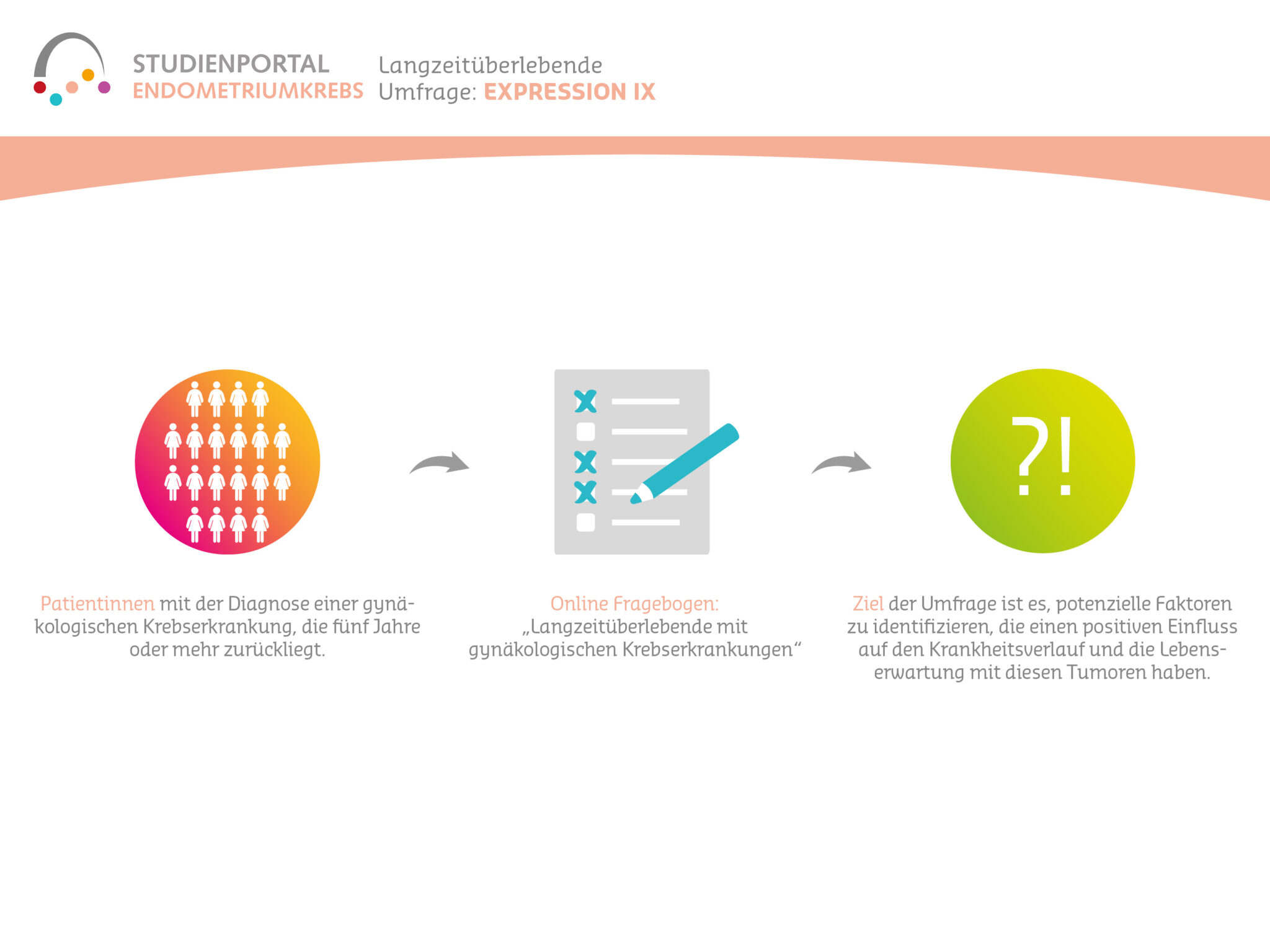
With the “Expression IX” survey, we would like to expand the patient cohort of long-term survivors and now aim to include long-term survival across all gynecological tumors. As part of the study, we aim to survey patients worldwide with cervical cancer, endometrial cancer and other rare gynecological tumors (e.g., gynecological sarcomas in the uterus or sex cord-stromal tumors) using an anonymized questionnaire and via the internet. The aim of the survey is to identify potential factors that have a positive influence on the course of the disease and life expectancy with these tumors.

What is the procedure for the survey?

You will receive various questionnaires to complete. By completing the questionnaire or answering the questions, you agree to participate in the survey and confirm that you have been fully informed about this survey and understand its objectives. We have deliberately limited the number of questions in order to keep the effort required from you as low as possible. To participate in this survey, we do not require any information such as your name, address or date of birth. The survey is conducted anonymously. Completing the questionnaire will take approximately 1 hour of your time. Please return the completed questionnaire to the person from whom you received the survey, or send it back to the address stated in the questionnaire. You can also participate via the link below.

Are there any risks?

No, it is a survey.

Eligibility requirements:

  • Women aged 18 years and older can participate in this study,
  • Patients diagnosed with a gynecological cancer five years ago or more

Where can I take part in the survey?

You can participate online or via the centers.

NOGGO S18 / EMRISK (Recruitment Completed)

NOGGO S18 – EMRISK

Recruitment of patients with endometrial cancer has been completed for this study.

Development of a Risk Prediction Model for Nausea and Vomiting During Chemotherapy

What is being investigated in this study?

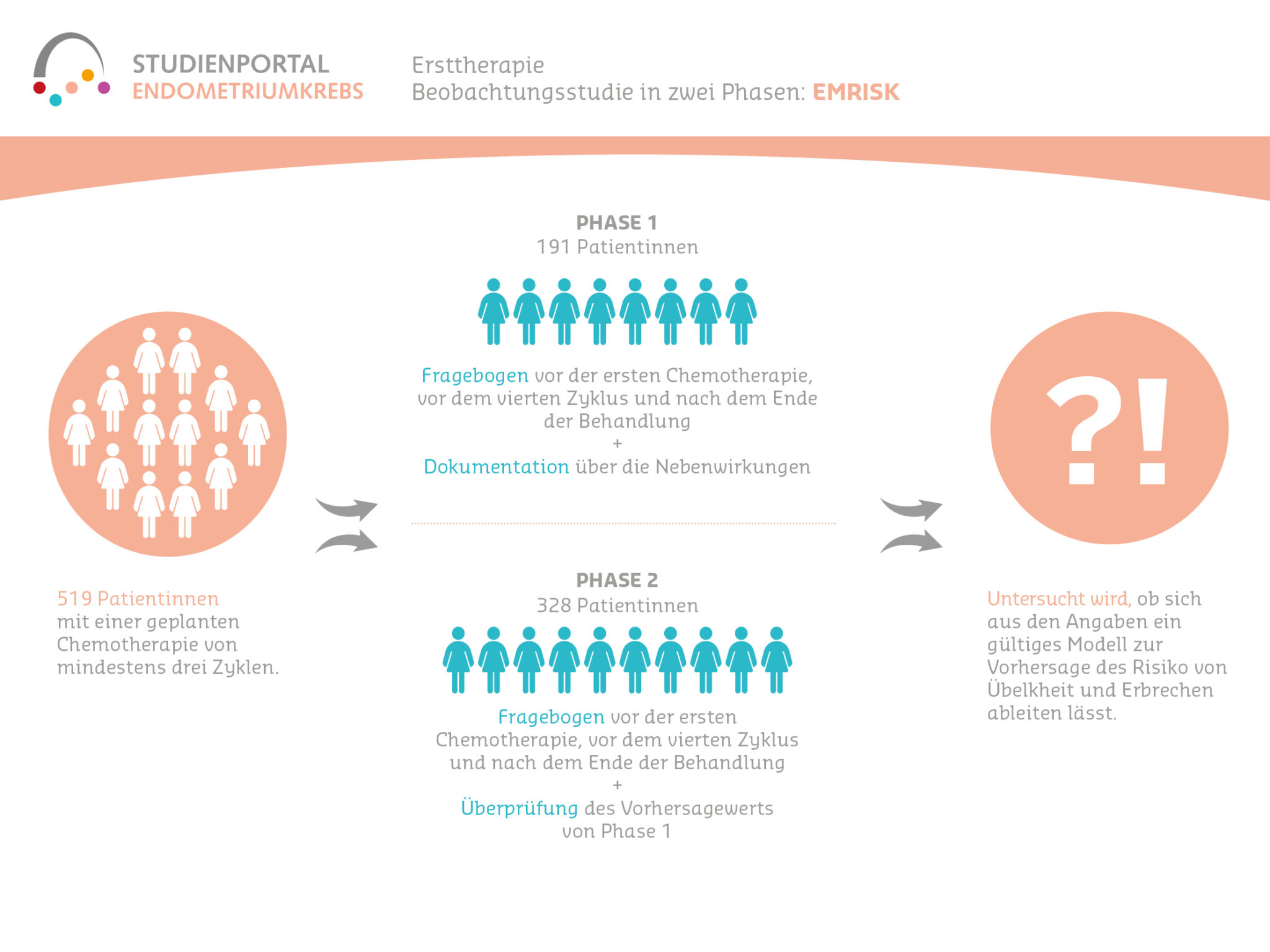
The EMRISK study is an observational study in two phases in which patients are surveyed about their medical history and risk factors for nausea and vomiting and about the actual occurrence of nausea and vomiting during chemotherapy. The study investigates whether a valid model for predicting the risk of nausea and vomiting can be derived from this information.

What is the objective of the study?

This study aims to develop a model to predict a patient’s risk of nausea and vomiting during chemotherapy.

What is the study procedure?

The study will be conducted with a total of 519 patients. In the first phase, 191 patients complete a questionnaire before their first chemotherapy session that provides information about their personal risk factors for nausea and vomiting. During chemotherapy treatment, a diary is then used to document when and how severely nausea and vomiting actually occur.

Correlations between the risk factors and the occurrence of nausea and vomiting are identified in order to develop a model that calculates the personal risk for each individual patient. Before the first chemotherapy session, before the fourth cycle, and after the end of treatment, patients are surveyed about their quality of life using the QLQ-C30 questionnaire. In the second phase, this model is applied to 328 patients before their treatment to verify its predictive value.

The first study phase has already been successfully completed.

Are there any risks?

No, EMRISK is an observational study. Patients participating in the study would receive the same therapy if they were not participating in the study. Therefore, study participation does not entail any risks.

Participation Requirements:

Women aged 18 years and older can participate in this study

  • who have been diagnosed with a primary gynecological cancer,
  • with planned chemotherapy of at least three cycles, adjuvant and neoadjuvant (as standard therapy),
  • who are willing and able to complete the questionnaires and maintain the diary,
  • and who have provided written informed consent.

This study is supported by:

Updated on: January 22, 2025

ENGOT-EN29 / TroFuse-033

ENGOT-EN29 / TroFuse-033

Therapy study on the combination of Sacituzumab Tirumotecan (SAC-TMT) and Pembrolizumab as maintenance therapy in patients with advanced or recurrent endometrial cancer

The TroFuse-033 study is an international, randomized (the treatment assignment for the individual patient is determined by chance) phase 3 study investigating a new combination therapy in patients with advanced or recurrent endometrial cancer whose tumor exhibits a functioning so-called mismatch repair mechanism (pMMR). The study examines whether a combination of Sacituzumab Tirumotecan (sac-TMT) and Pembrolizumab as maintenance therapy is more effective than maintenance therapy with Pembrolizumab alone.

What is being investigated in this study?

Endometrial cancer is one of the most common cancers of the uterus. When the disease is advanced or returns after surgery, treatment options are often limited.

Endometrial cancer can exhibit different biological characteristics. An important factor is whether certain repair mechanisms in the tumor cells are functional or not. One of these repair mechanisms is called mismatch repair (MMR).
When this repair mechanism does not function, it is referred to as dMMR (deficient mismatch repair). Such tumors often have many genetic alterations and frequently respond particularly well to immunotherapies such as Pembrolizumab.
If the repair system functions normally, it is referred to as pMMR (proficient mismatch repair). Patients with pMMR tumors often respond only to a limited extent to immunotherapies.

This study therefore examines a new therapeutic approach: Sacituzumab Tirumotecan (sac-TMT), an antibody-drug conjugate that can target cancer cells specifically, is combined with Pembrolizumab, an immunotherapy. The goal is to enhance the effect of Pembrolizumab and delay disease progression for a longer period.

What is the goal of the study?

The primary goal of the TroFuse-033 study is to examine whether patients with the combination of sac-TMT and Pembrolizumab live longer without disease progression than patients who receive only Pembrolizumab. Additionally, the study aims to investigate whether overall survival is extended and how well the therapy is tolerated.

What is the course of the study?

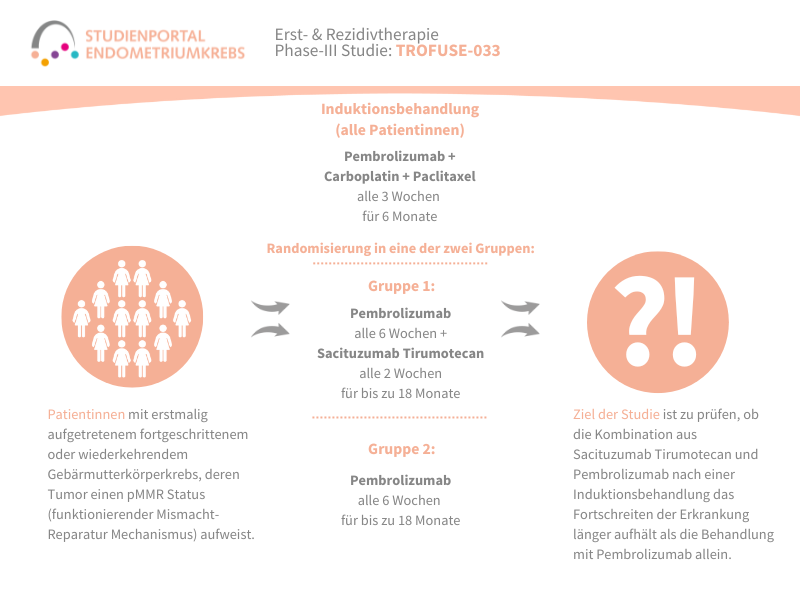
At the beginning, all participants receive a so-called induction treatment. This consists of the immunotherapy Pembrolizumab combined with the chemotherapy agents Carboplatin and Paclitaxel. The induction treatment is administered every 3 weeks for a total of 6 months.
If the disease does not progress further during this phase, patients transition to the maintenance phase. There they are randomly assigned to one of two groups:

Group 1:
Pembrolizumab every 6 weeks + Sacituzumab Tirumotecan every 2 weeks for up to 18 months

Group 2:
Pembrolizumab every 6 weeks for up to 18 months

If the disease progresses again despite these treatments, the treatment is discontinued and patients are treated outside the study.

Are there risks?

You will be informed about possible risks or side effects associated with participation during an informed consent discussion with your physician.

Participation requirements:

Women aged 18 years and older can participate in this study with:

  • confirmed diagnosis of newly diagnosed, advanced (stage III or IV) or recurrent endometrial cancer
  • confirmed pMMR status (functioning MM repair mechanism)
  • no prior systemic therapy for the disease in the advanced stage, except: chemotherapy in early cancer stage, radiation ± chemotherapy (completed at least 2 weeks before the start of study treatment), hormone therapy (completed at least 1 week before the start of study treatment)

In addition, there are other criteria that must be met for participation in the study. Further information is available from your treating physicians.

This study is supported by:

NOGGO-EN17 / DUOLife

DUOLife

Observational study on first-line therapy in patients with advanced or recurrent endometrial cancer

The DUOLife study is a non-interventional observational study. This means that patients receive an already planned or initiated and approved therapy – no therapies or other interventions are prescribed or adjusted by the study. This study aims solely to collect data on real-world experience from routine treatment in Germany (real-world data): How effective and tolerable is first-line therapy with carboplatin, paclitaxel, and durvalumab, followed by maintenance therapy with durvalumab – alone or in combination with olaparib – in patients with advanced or recurrent endometrial cancer (also known as uterine cancer)?

What is being investigated in this study?

Advanced (FIGO III or IV) or recurrent endometrial cancer is increasingly treated with chemotherapy in combination with immunotherapy. This study investigates how well such a therapy works in routine clinical practice. Large clinical trials have already confirmed the benefit of these therapies in hundreds of patients. Now, the effect is to be investigated outside of large clinical trials in normal routine treatment in Germany. This makes it possible to examine the effect of the therapy even in patients who did not participate in or could not participate in the clinical trials.

Durvalumab is an immune checkpoint inhibitor. The drug helps the body’s immune system better recognize and fight cancer cells. Many tumor cells are protected from attack by immune cells by a specific protein (PD-L1) on their surface. Durvalumab blocks this protective mechanism, allowing the immune system to attack the cancer cells. The combination of chemotherapy and immunotherapy can mutually reinforce each other: chemotherapy can damage tumor cells, making them more “visible” to the immune system – and durvalumab then helps the immune system fight them more effectively.

After chemotherapy, durvalumab is continued as maintenance therapy to keep any remaining cancer cells under long-term control and prevent recurrence.

Endometrial cancer can have different biological characteristics. An important factor is whether certain repair mechanisms in the tumor cells are functional or not. One of these repair mechanisms is called mismatch repair (MMR).
If this repair mechanism does not work, it is referred to as dMMR (deficient mismatch repair). Such tumors often have many genetic changes and frequently respond particularly well to immunotherapies like durvalumab.
If the repair system functions normally, it is referred to as pMMR (proficient mismatch repair). These tumors are generally less sensitive to immunotherapies, so additional drugs such as olaparib are used to enhance the effect.

Olaparib is a PARP inhibitor, a drug that prevents cancer cells from repairing damage to their DNA. The addition of olaparib to durvalumab maintenance therapy in pMMR tumors can help better control tumor growth by making cancer cells more susceptible to an immune response. This therapeutic benefit has already been demonstrated in the past, for example, by the DUO-E study.
The goal is to achieve the most effective and long-term control of the disease, even in patients with pMMR tumors, through the combined maintenance therapy of durvalumab + olaparib.

What is the aim of the study?

The DUOLife study focuses on the question of how long it takes until the next therapy is needed – a measure called rwTTNT (real-world Time to Next Treatment). In addition, it also assesses, among other things, how long the disease remains under control (rwPFS = real-world progression-free survival), what side effects occurred, and how patients are doing in their daily lives (quality of life, symptoms).

What is the study procedure?

A total of approximately 150 patients are expected to participate in Germany. All will receive a therapy that is already used in clinical routine – so it is not a clinical study with experimental treatment.

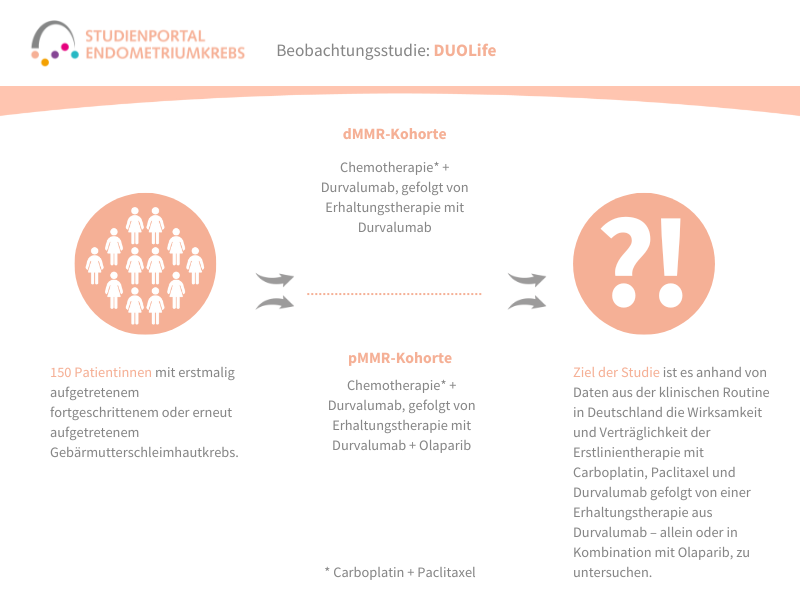
For every patient with endometrial cancer, the tumor’s dMMR or pMMR status is determined at diagnosis. Depending on their diagnosis, patients can be enrolled in one of these two groups:

  • dMMR cohort: Patients receive chemotherapy in combination with durvalumab. This is followed by maintenance therapy with durvalumab.
  • pMMR cohort: Patients also receive the combination of chemotherapy and durvalumab, followed by maintenance therapy with durvalumab plus olaparib.

For the study, no additional examinations or visits to the study center beyond routine care are required. In addition to routine examinations, you will only be asked to complete questionnaires for the evaluation of quality of life.

Are there risks?

This is a purely observational study, meaning patients receive their planned or already initiated cancer therapy. They do not receive any additional medications or other treatments (excluding medications for comorbidities or medications for potential side effects of routine treatment). The risks and side effects are therefore the same as if the treatment were to take place outside of this observational study.

Eligibility criteria:

Women aged 18 years and older can participate in this study if they have:

  • Advanced (FIGO stage III or IV) or recurrent endometrial cancer
  • Known MMR status (genetic characteristic of the tumor, determined at diagnosis: dMMR or pMMR)
  • Planned or already initiated first-line therapy with a combination of chemotherapy (carboplatin + paclitaxel, abbreviated CP) and durvalumab
  • Willingness to regularly complete quality of life questionnaires (known as PROs – patient-reported outcomes)

However, there are also other criteria that must be met for participation in the study. Further information can be obtained from your treating physicians.

This study is supported by:

Novel treatment options for the management of advanced-stage endometrial cancer

Novel treatment options for the management of
advanced-stage endometrial cancer

In this special presentation from IGCS Advances & Updates, Linda Ryan, a survivor of metastatic recurrent cervical cancer and patient research advocate, shares her story and experiences with clinical trials. Linda is joined by her gynecologic oncologist, Dr. Shannon Westin, Professor of Gynecologic Oncology at the University of Texas MD Anderson Cancer Center in Houston, Texas. Listen to Linda and Dr. Westin as they discuss current approval and therapy options for patients with recurrent cervical cancer.

Source: https://igcs.org/educational-webinars/

ASCO Results on Endometrial Cancer

ASCO Results on Endometrial Cancer

Yesterday, the 26th NOGGO Update on Gynecological Oncology took place, where important studies on endometrial cancer from ASCO 2025 were presented. We were on site and would like to share the most important findings:

DUO-E Study – ctDNA as an Important Marker

The DUO-E Study had already shown in 2024 that the combination of chemotherapy, durvalumab, and olaparib significantly improved disease progression in both mismatch repair-deficient (dMMR) and -proficient (pMMR) patients. A current analysis of circulating tumor DNA (ctDNA) now confirms:

  • Patients with high ctDNA levels at baseline have a higher risk of recurrence.

  • In all treated women, ctDNA levels decreased more under combination therapy compared to chemotherapy alone.

  • Particularly the addition of durvalumab led to rapid ctDNA reduction and kept it low during the maintenance phase.

  • The additional administration of olaparib during maintenance had a further positive effect on ctDNA reduction in pMMR patients.
    This shows that the therapy not only delays progression but also demonstrably reduces tumor burden.

RUBY Study – Dostarlimab Plus CTX Confirms Benefit

Extended analyses of the RUBY Study show that the combination of dostarlimab and chemotherapy provides a lasting clinical benefit in both advanced and recurrent endometrial cancer:

  • The time to first treatment discontinuation (TFST) and overall survival benefit could be extended – regardless of mismatch status (dMMR or pMMR).

  • Quality of life did not suffer under immunotherapy either – on the contrary: patients recovered in comparable time as under standard therapy.
    This clearly confirms dostarlimab plus chemotherapy as the new standard.

Phase 2 Study – Letrozole, Abemaciclib & Metformin

In a smaller study in estrogen receptor-positive, recurrent endometrial cancer, the combination letrozole + abemaciclib + metformin achieved an objective response rate (= proportion of patients in whom a tumor demonstrably becomes smaller or disappears completely) of 32%. The median time during which the disease did not progress (PFS) was 19.4 months, and no patient had to discontinue therapy due to side effects.
This indicates a safe and effective new therapeutic approach – although coverage by health insurance companies still needs to be reviewed.

EXPRESSION XI – Survey Study

The EXPRESSION XI Study clearly showed: patients want structured follow-up care programs, especially regarding nutrition during therapy and physical activity afterward. This strengthens the call for targeted lifestyle programs as an integral part of follow-up care.

Conclusion for Patients & Clinics

The presented studies support key advances:

  • DUO-E: Molecular tumor burden can be measured through therapy – a step toward individualized management.

  • RUBY: Dostarlimab plus chemotherapy has proven itself as the new standard treatment – effective and quality-of-life friendly.

  • Letrozole combination: Shows promising activity in ER-positive, recurrent endometrial cancer.

  • Lifestyle programs: Are important for patients and should be more firmly anchored in the healthcare system.

Despite these developments, there are currently no changes to the guidelines yet. However, the data are promising and pave the way for future treatment options.

Prof. Sehouli from Charité: New treatment option for endometrial cancer patients

Prof. Sehouli from Charité: New treatment option
for endometrial cancer patients

Encouraging news for those affected by uterine cancer: In a few weeks, the range of treatment options will expand. In future, women with primary advanced or recurrent endometrial carcinoma will be able to be treated with the active substances durvalumab and olaparib.

The basis for this new treatment option is the results from the Phase III trial DUO-E. The trial was coordinated within ENGOT (Network of European Study Groups) and in Germany by NOGGO (www.noggo.de).

The trial investigated the use of durvalumab (a novel checkpoint inhibitor) and olaparib in uterine cancer patients. Until now, olaparib has only been used in certain patients with ovarian cancer and breast cancer. Following the DUO-E trial, durvalumab plus chemotherapy, followed by durvalumab and olaparib, can now be recommended as first-line treatment for patients with mismatch repair-proficient (pMMR) disease, as well as durvalumab plus chemotherapy, followed by durvalumab alone, for patients with mismatch repair-deficient (dMMR) disease. Mismatch status determines the repair capacity of the tumour cells in the tumour tissue.

In the trial, both therapies showed a statistically significant and clinically meaningful improvement in progression-free survival compared with chemotherapy alone. The recommendation for approval was made by the Committee for Medicinal Products for Human Use (CHMP) of the European Medicines Agency (EMA).

This result and the resulting new treatment option are further evidence of how important participation in clinical trials is.